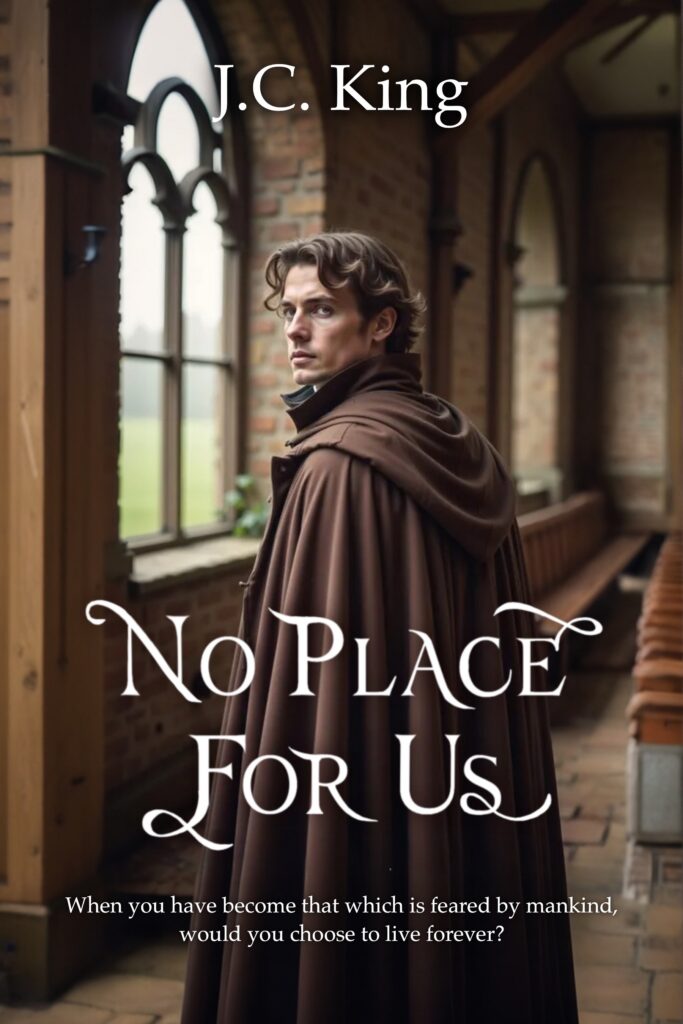
If you had told me a year ago that I would not only read but deeply love a 600+ page Christian historical fiction novel about vampires, I would not have believed you. Fantasy and vampire lore are not genres I go out of my way to read. Most of my experience has been with Twilight, which a coworker got me hooked on back when the first movie came out. I know the basic universal “rules” of vampire fiction, but definitely am not an expert. However, a trusted friend recommended No Place for Us by J.C. King, and I decided to take the leap. I am so incredibly glad I did. I finished the book several weeks ago, and my mind still wanders back into the rich historical world the author constructed. I was genuinely sad for it to end.
I have to admit, it did take me a few chapters before I became fully immersed in the story. That time was spent getting to know the characters and understanding what was happening. However, once I had my footing, I was hooked! The book follows four young men who set off on what they thought was a voyage to America in the late 18th century. The journey did not go as planned and instead had devastating consequences. The book explores the different ways they adjusted to their new lives.
The Characters Who Stole the Show
Emile: A down-on-his-luck French aristocrat who leaps at the chance to go back to his life as a selfish libertine in Paris. He becomes disillusioned with this lifestyle and slowly opens his heart and mind. Every time a new section shifted back to his perspective, I knew it was going to be a brilliant chapter and I was excited to see what he was up to.
Sebastian: The Spanish blacksmith, he didn’t seek adventure; he just wanted to build a better life for the family he left behind. His overarching arc is defined by a terrifying fear of losing physical control and accidentally bringing harm to the people he loves. He throws all his remaining energy into getting his family settled securely in America, while simultaneously orchestrating a quiet plan to completely erase himself from their lives.
What I found structurally brilliant about the book’s writing was how Sebastian’s character “goes quiet” in the middle of the narrative while the other three receive more focus. Initially, I missed his perspective because he and Emile were my early favorites. However, I soon realized this was a masterful, deliberate choice by the author. By reducing our time peeking into Sebastian’s life in the middle of the book, the author forces us as readers to start forgetting about him. It perfectly mirrors Sebastian’s own internal efforts to fade into the background of his family’s lives.
Nathaniel and William: They provide yet another approach to life as vampires. Rather than wasting time falling into despair or feeling sorry for themselves, they approach their new reality with immense pragmatism. They resettle in the small English town of Wakefield, an ideal geographical layout for newly made vampires needing to adapt to their physical constraints while continuing their life’s work. Nathaniel finds a post as a local preacher, and William utilizes his skills as a doctor while operating the town apothecary.
If this sounds like a cozy, predictable pastoral romance, be warned: the author completely refuses to follow standard, predictable tropes! Without giving away any spoilers, the plot takes sharp, unexpected turns that subvert everything you think is coming. It is a genuine page-turner that keeps you guessing.
A Refreshing and Natural Approach to Faith
Not only were the plot and characters well written, but the Christian themes were as well. So often in faith-based fiction, you run into rigid, archetypal characters who exist simply to check off theological boxes. No Place for Us completely avoids this cliché. The spiritual arcs are gentle, messy, and realistic.
One character in particular stands out to me—they don’t experience a sudden, dramatic “come to Jesus” lightning-bolt moment. Instead, it is a slow, quiet, and tender return to faith. Everyone in this book is still learning, and nobody is perfect. Faith is integrated naturally into the dialogue and environment rather than being awkwardly shoehorned into the text. The author frequently presents opportunities where a lesser writer would have inserted a multi-page sermon, but J.C. King respects the intelligence of the audience, trusting the reader to make the thematic connections themselves.
The book functions as an incredible philosophical thought experiment: “Where does God fit into immortality, and what does becoming a creature of the night mean for the human soul?” The characters wrestle with these questions and reach their own individual conclusions, but the narrative leaves the ultimate judgment to the reader. It challenges you to look at the nature of God, grace, and redemption from an angle you likely have never considered before.
Final Thoughts
While No Place for Us is a long book, that length is its greatest asset. When a story is this immersive, you don’t want it to end. It is one of those rare, magical books that you find your mind wandering back to when you aren’t actively reading it. I spent weeks wondering what the four main characters were up to in their daily lives long after I finished the book.
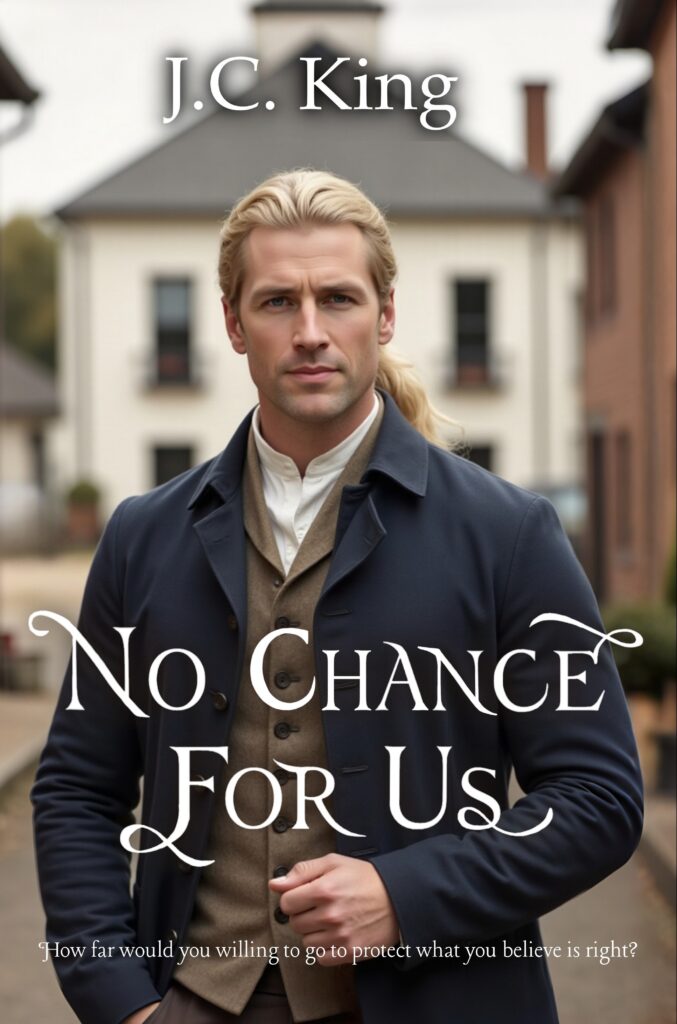
I cannot recommend this book highly enough, especially to those who think it isn’t “their type of genre.” I am eagerly waiting for the audiobook release of the sequel, No Chance for Us, so I can dive right back into this world!








If you had told me a year ago that I would not only read but deeply love a 600+ page Christian historical fiction novel about vampires, I would not have believed you. Fantasy and vampire lore are not genres I go out of my way to read. Most of my experience has been with Twilight, which a coworker got me hooked on back when the first movie came out. I know the basic universal “rules” of vampire fiction, but definitely am not an expert. However, a trusted friend recommended No Place for Us by J.C. King, and I decided to take the leap. I am so incredibly glad I did. I finished the book several weeks ago, and my mind still wanders back into the rich historical world the author constructed. I was genuinely sad for it to end.
I have to admit, it did take me a few chapters before I became fully immersed in the story. That time was spent getting to know the characters and understanding what was happening. However, once I had my footing, I was hooked! The book follows four young men who set off on what they thought was a voyage to America in the late 18th century. The journey did not go as planned and instead had devastating consequences. The book explores the different ways they adjusted to their new lives.
The Characters Who Stole the Show
Emile: A down-on-his-luck French aristocrat who leaps at the chance to go back to his life as a selfish libertine in Paris. He becomes disillusioned with this lifestyle and slowly opens his heart and mind. Every time a new section shifted back to his perspective, I knew it was going to be a brilliant chapter and I was excited to see what he was up to.
Sebastian: The Spanish blacksmith, he didn’t seek adventure; he just wanted to build a better life for the family he left behind. His overarching arc is defined by a terrifying fear of losing physical control and accidentally bringing harm to the people he loves. He throws all his remaining energy into getting his family settled securely in America, while simultaneously orchestrating a quiet plan to completely erase himself from their lives.
What I found structurally brilliant about the book’s writing was how Sebastian’s character “goes quiet” in the middle of the narrative while the other three receive more focus. Initially, I missed his perspective because he and Emile were my early favorites. However, I soon realized this was a masterful, deliberate choice by the author. By reducing our time peeking into Sebastian’s life in the middle of the book, the author forces us as readers to start forgetting about him. It perfectly mirrors Sebastian’s own internal efforts to fade into the background of his family’s lives.
Nathaniel and William: They provide yet another approach to life as vampires. Rather than wasting time falling into despair or feeling sorry for themselves, they approach their new reality with immense pragmatism. They resettle in the small English town of Wakefield, an ideal geographical layout for newly made vampires needing to adapt to their physical constraints while continuing their life’s work. Nathaniel finds a post as a local preacher, and William utilizes his skills as a doctor while operating the town apothecary.
If this sounds like a cozy, predictable pastoral romance, be warned: the author completely refuses to follow standard, predictable tropes! Without giving away any spoilers, the plot takes sharp, unexpected turns that subvert everything you think is coming. It is a genuine page-turner that keeps you guessing.
A Refreshing and Natural Approach to Faith
Not only were the plot and characters well written, but the Christian themes were as well. So often in faith-based fiction, you run into rigid, archetypal characters who exist simply to check off theological boxes. No Place for Us completely avoids this cliché. The spiritual arcs are gentle, messy, and realistic.
One character in particular stands out to me—they don’t experience a sudden, dramatic “come to Jesus” lightning-bolt moment. Instead, it is a slow, quiet, and tender return to faith. Everyone in this book is still learning, and nobody is perfect. Faith is integrated naturally into the dialogue and environment rather than being awkwardly shoehorned into the text. The author frequently presents opportunities where a lesser writer would have inserted a multi-page sermon, but J.C. King respects the intelligence of the audience, trusting the reader to make the thematic connections themselves.
The book functions as an incredible philosophical thought experiment: “Where does God fit into immortality, and what does becoming a creature of the night mean for the human soul?” The characters wrestle with these questions and reach their own individual conclusions, but the narrative leaves the ultimate judgment to the reader. It challenges you to look at the nature of God, grace, and redemption from an angle you likely have never considered before.
Final Thoughts
While No Place for Us is a long book, that length is its greatest asset. When a story is this immersive, you don’t want it to end. It is one of those rare, magical books that you find your mind wandering back to when you aren’t actively reading it. I spent weeks wondering what the four main characters were up to in their daily lives long after I finished the book.
I cannot recommend this book highly enough, especially to those who think it isn’t “their type of genre.” I am eagerly waiting for the audiobook release of the sequel, No Chance for Us, so I can dive right back into this world!